ServicesConstruction Debris Removal
Construction Debris Removal in Winter Garden
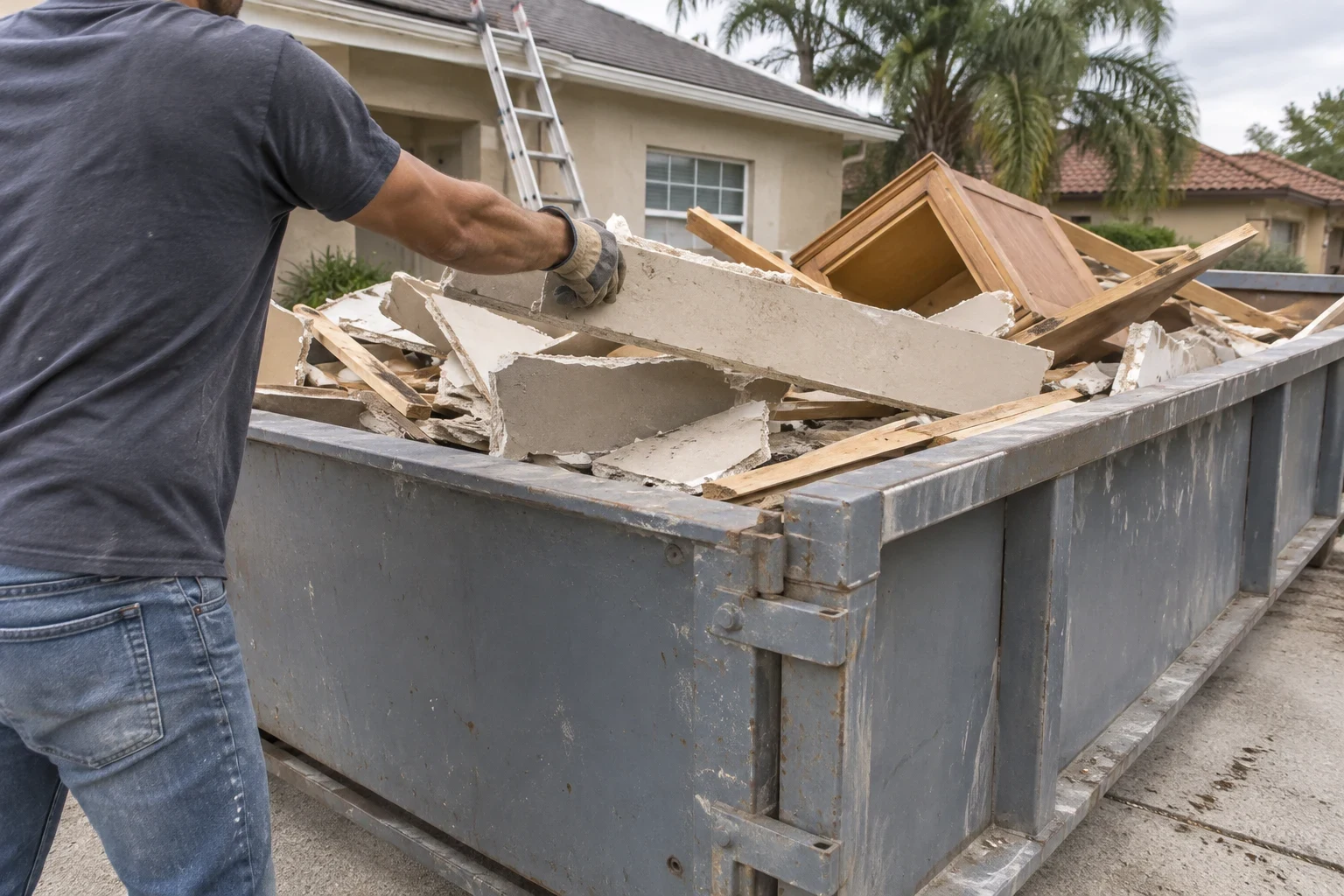
Drywall scraps, torn-off shingles, broken tile and old framing pile up fast on any build or remodel. We set a roll-off where it works for your crew, swap it when it fills, and haul the debris away so the site stays workable and the street stays clear.
Steady debris removal for remodels, roofs and new builds
Construction debris removal is for jobs that make more waste than one trip to the dump can handle. That covers a kitchen taken down to the studs, a reroof, an addition or a full new build. We bring a dumpster sized for the material you are tearing out, pick it up when it is full, and bring an empty one back if the work keeps going.
We work the way we would want a neighbor to work on our own street. The container goes where you and your crew agree it should. We put boards under it to protect the driveway, and the driver checks for low limbs and wires before setting down. When the last load leaves, we pick up the nails and loose scraps around where it sat.
If you only need one container for a weekend cleanout, our roll off dumpster rental page covers that. For a business that needs regular trash pickup, see front load dumpster service.
What the work includes
Sizing by material
Tell us what is coming out and roughly how much. Shingles and concrete are heavy for their volume, so a roofer may be better served by a smaller container with room in its weight allowance than a big one that hits its limit half full. Light, bulky debris like cabinets and framing lumber goes the other way.
Placement that protects the driveway
We lay boards under the rails before setting the roll-off down. That spreads the load and helps keep marks off concrete and pavers.
Swaps on your schedule
On longer jobs we pick up the full container and drop an empty one in the same spot, so your crew keeps tearing out instead of waiting. You call when it is close to full, and we line up the swap.
Clear rules on what goes in
Before delivery we go over what the disposal facility accepts. Paint, chemicals, tires, batteries and anything holding refrigerant need separate handling, and we tell you up front so nothing gets left behind at pickup.
Haul away and cleanup
Each load goes to a proper disposal or recycling facility. After the final pickup we clear loose debris from the footprint.
Signs it is time for debris removal
- The pile has outgrown the truck bed
- If someone is making daily dump runs in a pickup, that time costs more than it looks. A container on site keeps the crew on the work.
- A roof tear-off is on the calendar
- One layer of shingles fills a container faster than most people expect, and it is heavy. Planning the size ahead avoids an overweight load.
- Debris is sitting out in the rain
- Summer afternoon storms soak open piles. Wet drywall and insulation get heavier and messier to move, and loose nails wash into the lawn.
- The neighbors are noticing
- A scrap pile by the curb invites complaints and, in many communities, a letter from the HOA. A tidy container with a set pickup date reads very differently.
- The project runs past a week
- Remodels and builds make debris in waves. Scheduled swaps keep the site from backing up between phases.
How a debris removal job runs
- 1
A call to scope it
You tell us the project, the materials and where the container can go. We suggest yard sizes and give you a quote by phone.
- 2
Delivery and setup
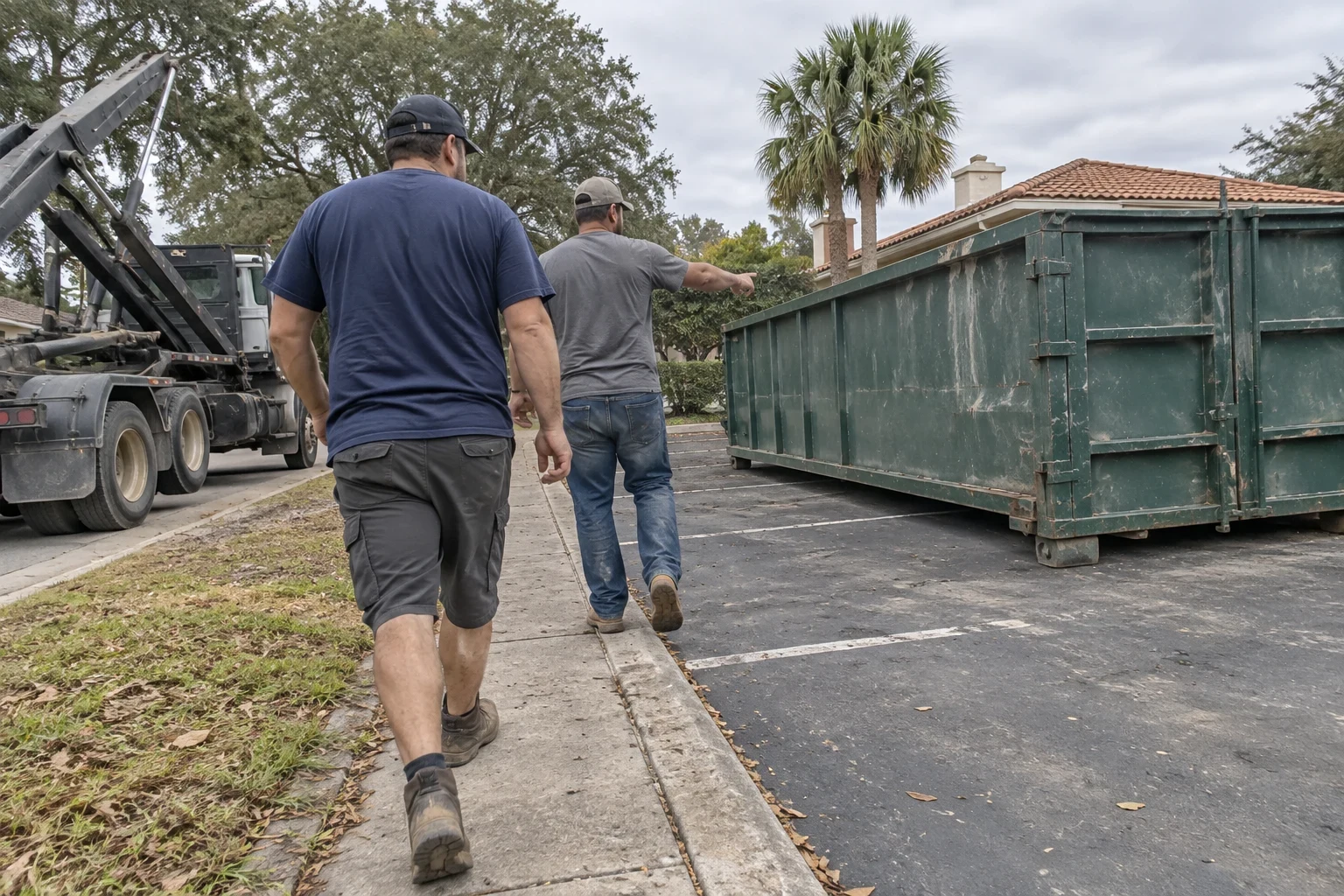
The driver confirms placement with you or your foreman, checks overhead clearance, lays boards and sets the roll-off with the door facing the way you will load. If it has to sit on the street, we talk through whether a permit is needed.
- 3
Loading while you work
Load flat and even, break down bulky pieces, and keep debris below the top rail. That keeps the load safe to haul and saves a second trip.
- 4
Swaps and final pickup
Call when it is nearly full and we schedule a swap or the final haul away. We clear the footprint before we leave.
What shapes the cost
Every job is different, so we quote it after hearing what you are removing. We walk through each part of the quote on the call. We also tell you up front what could add to it, such as extra weight or extra days, so the final bill matches what you expected.
- Container size
- Larger yard sizes cost more to deliver and dispose of. Choosing the right size the first time is usually the best savings.
- Material and weight
- Concrete, tile, dirt and shingles weigh far more than wood or drywall. Weight over the allowance is the most common surprise, and we help you plan around it.
- Rental length and swaps
- A short tear-out may need one container. A build may need several swaps over a few weeks, and each one is a separate haul.
- Access and placement
- Tight lots, soft ground and street placement can change how the job is set up and whether a permit fee applies.
Questions about construction debris removal
- Can I mix concrete with other debris?
- Usually it is better not to. Concrete, brick and block are heavy enough that mixing them with general debris can push a container over its weight limit. Tell us how much you have, and we will suggest a separate smaller load or the right container for it.
- Will the dumpster mark up my driveway?
- We put boards under the container to spread its weight, which helps on concrete and pavers. A loaded roll-off is heavy, so we also steer clear of slab edges. If the surface is soft or newly poured, tell us and we will suggest another spot.
- Do I need a permit?
- On your own driveway, usually not. If the container has to sit on a public street, the city or county may require one, and your HOA may have its own rules about placement and timing. We go over what to check before delivery.
- Do you work with contractors and roofers?
- Yes. We set up containers for remodelers, roofers and builders across Winter Garden, Ocoee, Clermont and Horizon West. We coordinate placement and swaps with whoever is running the site, so the homeowner is not stuck passing messages.
- What can't go in the container?
- Paint, solvents, oil and other hazardous materials, plus tires, batteries and appliances that hold refrigerant. These need separate disposal. If you are unsure about something, ask on the call and we will give you a straight answer.
Keep the job site clear and the work moving
Tell us what you are tearing out and when you start. We will recommend a size, set a delivery day and walk you through a clear quote over the phone.